Technical SEO
Great content can't rank on a broken foundation. Chicago technical SEO finds and fixes the crawl, speed, and indexation problems that quietly cap your search performance.
 Strategy by Kyle EgglestonOwner & Lead SEO Consultant
What is Technical SEO?
Technical SEO is the work of making sure search engines can crawl, render, index, and understand your website without friction. It's the foundation everything else sits on: you can publish brilliant content and earn strong links, but if Google can't access your pages, your site loads slowly, or your structured data is missing, you'll never reach your potential. The discipline covers site speed and Core Web Vitals, crawlability and internal linking, indexation and canonical management, schema markup, mobile usability, and the architecture that helps Google understand which pages matter most. Most websites accumulate technical debt over years of redesigns, plugin additions, and content sprawl: broken links, redirect chains, duplicate URLs, and bloated code. Technical SEO is the systematic process of finding that debt, prioritizing it by real ranking impact, and fixing it so the rest of your SEO investment can actually pay off.


Most 'SEO problems' are plumbing problems: crawl traps, slow pages, broken canonicals quietly bleeding rankings. Fix the foundation and the content you already have starts ranking like it should.
Sound Familiar?
Signs your business needs technical seo now
Pages you publish take too long to get indexed, or never appear in Google at all.
Your traffic has plateaued even though you keep publishing genuinely good content.
PageSpeed and Core Web Vitals scores sit in the red, especially on mobile.
You've been through a redesign, migration, or platform change and rankings dropped afterward.
Search Console shows coverage errors, or you've never opened the coverage report.
You suspect duplicate or thin pages exist but have no full crawl to confirm it.
If more than one of these hits home, the gap is already costing you leads. Get a free audit and we'll show you exactly where you stand.
The Payoff
What strong technical seo compounds into
Done right, technical seo is not a one-off fix. It becomes the foundation for stronger search performance, turning steady execution into rankings and revenue that keep climbing.
This chart illustrates how organic growth can compound over time. It does not represent a specific client account.
What Bad Technical SEO Looks Like
Running a single audit tool, exporting a 200-issue spreadsheet, and handing it over with no prioritization, so nobody knows what actually matters.
Chasing a perfect PageSpeed score while ignoring the real-world Core Web Vitals data Google actually uses to rank pages.
Implementing schema markup that's incomplete or invalid, then never testing it in the Rich Results Test to confirm it works.
Letting redirect chains, broken links, and orphaned pages pile up so crawl budget is wasted on URLs that don't matter.
Allowing duplicate and thin pages to be indexed, diluting topical signals and competing against your own important content.
Treating technical SEO as a one-time project instead of monitoring crawl health and Search Console coverage every month.
How We Deliver
Full crawl audit
We run a complete Screaming Frog crawl of your entire site to surface broken links, redirect chains, duplicate content, orphaned pages, thin content, missing meta data, and incorrect canonicals. Every issue is logged and then prioritized by its actual impact on rankings, not just its severity score. You get a clear action plan instead of an overwhelming spreadsheet.
Core Web Vitals remediation
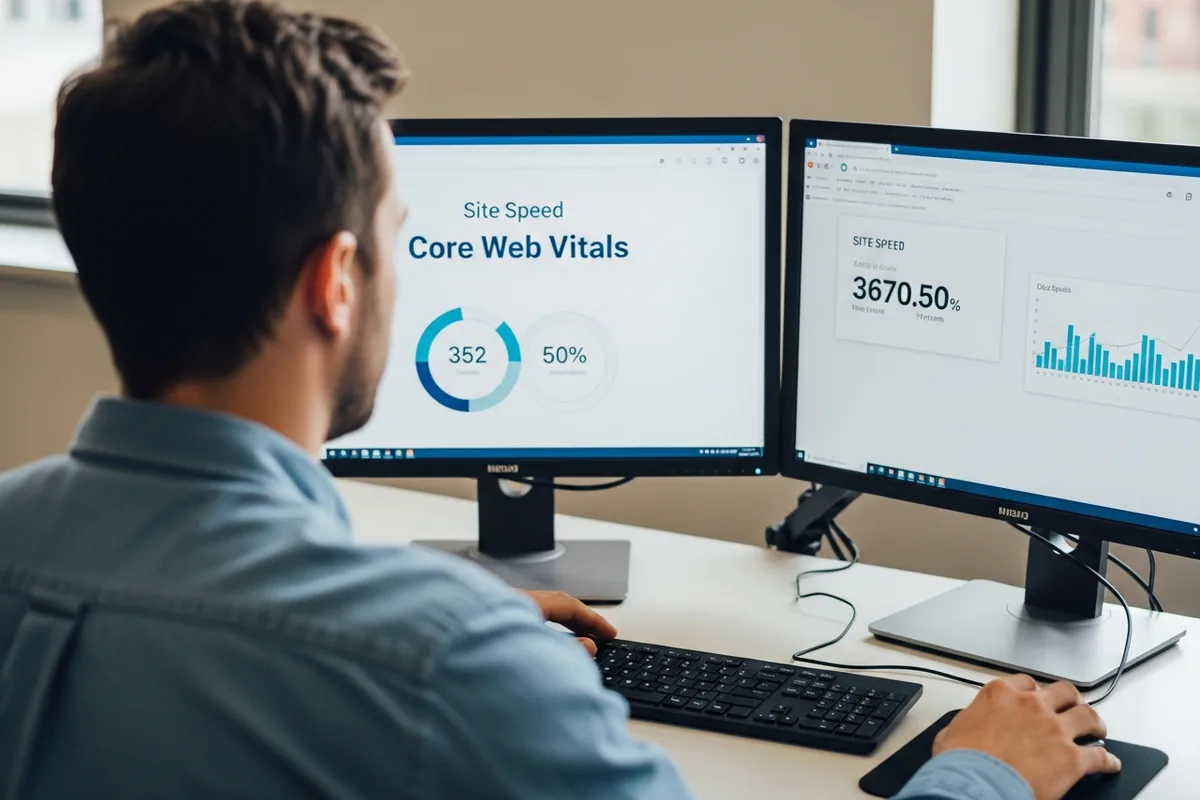
We diagnose and fix the issues dragging down LCP, CLS, and INP, the field metrics Google uses as ranking signals. That includes image compression, lazy loading, eliminating render-blocking scripts, locking down layout shift sources, and improving server response time. We measure against real-world Chrome User Experience data so the gains show up where they count.
Schema markup implementation
We implement the right structured data for your business: LocalBusiness, Service, FAQPage, HowTo, Review, BreadcrumbList, and SpeakableSpecification for AI Overviews. Every markup is validated in Google's Rich Results Test so it's eligible for enhanced listings. Proper schema helps both traditional search features and AI answer engines understand and cite your content.
Site architecture review
We evaluate your URL structure, internal linking patterns, crawl depth, and page hierarchy so Google reaches your most important pages first and understands your topical structure. We flatten unnecessarily deep pages, strengthen internal links to priority content, and clarify the relationships between related pages. The result is a site that's easier for both crawlers and visitors to navigate.
Indexation management
We review your Google Search Console coverage report, audit your XML sitemap and robots.txt, and resolve noindex, nofollow, and canonical conflicts. The goal is simple: every page you want indexed is indexed, and every page you don't want competing is excluded. We then monitor coverage monthly so new issues are caught before they cost you traffic.
Concrete Deliverables
- Full technical audit PDF with a priority matrix ranking issues by impact and effort
- Core Web Vitals improvement plan with before-and-after performance results
- Schema implementation and validation report covering every markup type deployed
- Crawl health baseline plus ongoing monthly monitoring of new technical issues
- Google Search Console issue resolution log tracking each error to closure
- Site architecture and internal linking recommendations with implementation guidance
Tech & Tools
 Screaming FrogCrawl the full site to surface technical errors and content issues.
 Google Search ConsoleMonitor indexation, coverage errors, and real query performance.
 PageSpeed InsightsMeasure Core Web Vitals against real-world Chrome user data.
 GTmetrixDiagnose page load waterfalls and pinpoint performance bottlenecks.
 CloudflareImprove global load times, caching, and server response performance.
 Chrome DevToolsDebug rendering, layout shift, and JavaScript execution issues.
 Ahrefs Site AuditTrack crawl health trends and prioritize fixes by impact.
 Google Rich Results TestValidate schema markup eligibility for enhanced search features.
Technical SEO for Every Chicago Industry
Related Services
Local SEO
Local SEO for Chicago businesses. We optimize your Google Business Profile, fix citations, and build reviews to win the map pack. Free local audit.
Content & SEO
Content SEO for Chicago businesses. We map keywords, audit existing pages, and produce E-E-A-T content that ranks and converts. Free content audit.
Enterprise & Franchise SEO
Enterprise and franchise SEO for multi-location brands. We scale location pages, fix technical debt, and centralize reporting across every market. Free audit.
Frequently Asked Questions
Technical SEO is everything that helps search engines crawl, render, index, and understand your website. It covers site speed and Core Web Vitals, crawlability, indexation, structured data, mobile usability, URL structure, and internal linking. Unlike content or link building, technical SEO is largely invisible to visitors, but it determines whether your content can rank at all. Think of it as the foundation: a fast, clean, well-structured site lets every other SEO effort perform, while a broken one quietly caps your ceiling no matter how good your content is.
Core Web Vitals are three field metrics Google uses to measure user experience: Largest Contentful Paint (loading speed), Cumulative Layout Shift (visual stability), and Interaction to Next Paint (responsiveness). They are confirmed ranking signals, and just as importantly they affect conversions, slow, jumpy pages drive visitors away. Google measures these using real Chrome user data, not lab tests, so we optimize against actual field performance. Fixing them usually involves image optimization, removing render-blocking scripts, reserving space for elements, and improving server response time.
Common warning signs include pages that won't appear in Google no matter what you do, traffic that plateaus despite publishing good content, slow load times, and errors in Google Search Console's coverage report. But many technical issues are invisible without a proper audit: redirect chains, duplicate URLs, broken schema, crawl budget waste, and JavaScript rendering problems rarely announce themselves. That's why we start every engagement with a full crawl: it surfaces the hidden issues that are quietly holding your rankings back so we can prioritize and fix them.
Schema markup is structured data added to your pages that explicitly tells search engines what your content means: that this is a business, this is a review, this is an FAQ. It powers rich results like star ratings, FAQ dropdowns, and breadcrumbs, which make your listings more prominent and clickable. Increasingly it also helps AI answer engines like Google's AI Overviews understand and cite your content. We implement the right types for your business and validate every one, so you're eligible for enhanced features competitors often miss.
The initial audit typically takes one to two weeks depending on site size. Implementation depends on the scope and your development resources: quick wins like fixing broken links, redirects, and meta data can happen within days, while Core Web Vitals work and architecture changes may span several weeks. The ranking impact follows once Google recrawls and reprocesses the improved pages, usually within four to eight weeks. Technical SEO isn't entirely one-and-done, though; we recommend ongoing monthly monitoring to catch new issues before they cost traffic.
Often, yes: especially when the drop followed a redesign, migration, or platform change, which are classic sources of technical regressions. We investigate by comparing what changed: broken redirects, accidental noindex tags, lost internal links, canonical errors, or performance degradation are frequent culprits. A thorough crawl and Search Console review usually reveals the cause. That said, ranking losses sometimes stem from content quality or algorithm updates rather than technical issues, so we diagnose honestly and tell you whether technical fixes alone will recover the traffic.
Yes, building on a sound technical foundation from the start is far cheaper than retrofitting later. A new site benefits from clean URL structure, proper indexation rules, fast performance, complete schema, and a logical internal linking plan baked in before content scales. We also make sure search engines can discover and index your pages quickly via an accurate sitemap and clean robots.txt. Getting these fundamentals right early means your content and link-building efforts compound instead of fighting against avoidable technical drag.
There's overlap, but the focus differs. Web development builds and maintains the site's functionality and design; technical SEO ensures that build is optimized for search engines to crawl, render, and rank. A developer might create a beautiful, functional page that's invisible to Google because of a rendering issue, a missing canonical, or poor performance. We work alongside your developers, translating SEO requirements into specific technical changes and validating that they're implemented correctly. In short, development makes the site work for users; technical SEO makes it work for search.
The Cost of Waiting
Good content can't outrun a broken foundation
Technical debt doesn't announce itself, it quietly caps everything else you invest in. Every week a crawl trap, slow page, or bad canonical goes unfixed, Google keeps under-ranking pages you already paid to create, and the new content and links you add on top inherit the same ceiling. The longer the debt sits, the more it compounds across redesigns and new pages, and the more expensive it becomes to untangle.
Content and links you're already paying for keep underperforming because the pages they live on can't rank to their potential.
Slow Core Web Vitals cost you conversions and rankings at the same time, every single day they go unaddressed.
Technical debt compounds with every redesign and new page, so the cleanup only gets larger and costlier the longer it waits.
No obligation. We'll show you what the delay is costing and where to start.
The Shift to AI Answers
Google is answering searches before anyone clicks
AI Overviews, ChatGPT, and Gemini now settle more and more searches right on the results page. For Chicago businesses, that means the clicks (and the calls) that used to be yours are quietly going to whatever the AI decides to cite.
of the #1 result's clicks vanish when an AI Overview sits above it, leads that never reach your phone.
of informational and “how-to” searches already trigger an AI Overview, exactly where service businesses get found, and it's climbing.
Google searches still send a click to the open web. The rest end on the results page, and AI answers are accelerating it.
The businesses that adapt now will own the answer box.
We make sure AI Overviews, ChatGPT, and Gemini cite you, not the competitor down the street, so the next wave of searchers still ends up on your phone.
Need a Technical SEO Expert?
We audit, build, and execute senior-level strategies for Chicago businesses.
Get Your Free Audit