
API & MCP Integrations
Your CRM, your analytics, your database, and your AI tools should talk to each other automatically. Chicago API and MCP integrations connect them using MCP, the emerging standard that lets AI assistants securely work with your own business data.
Get Your Free Audit
What is API & MCP Integrations?
API and MCP integrations is the work of connecting the separate systems your business already runs, your CRM, your analytics platform, your marketing tools, your internal database, so data moves between them automatically instead of through manual export-and-import. In plain English, MCP (Model Context Protocol) is a standard way to let an AI assistant securely look up and use your business's own information and tools, the same way a universal adapter lets one plug work in outlets around the world. Instead of every AI tool needing a custom, one-off connection to your systems, MCP gives them a shared, secure language for asking your data a question and getting a real answer back. We build both layers: traditional API integrations that keep your existing software in sync, and MCP connections that let AI assistants pull live answers from your CRM, your inventory, or your reporting data rather than working from a stale export. This is the same integration work behind the tools running on this website, which pull live data instead of showing static numbers.
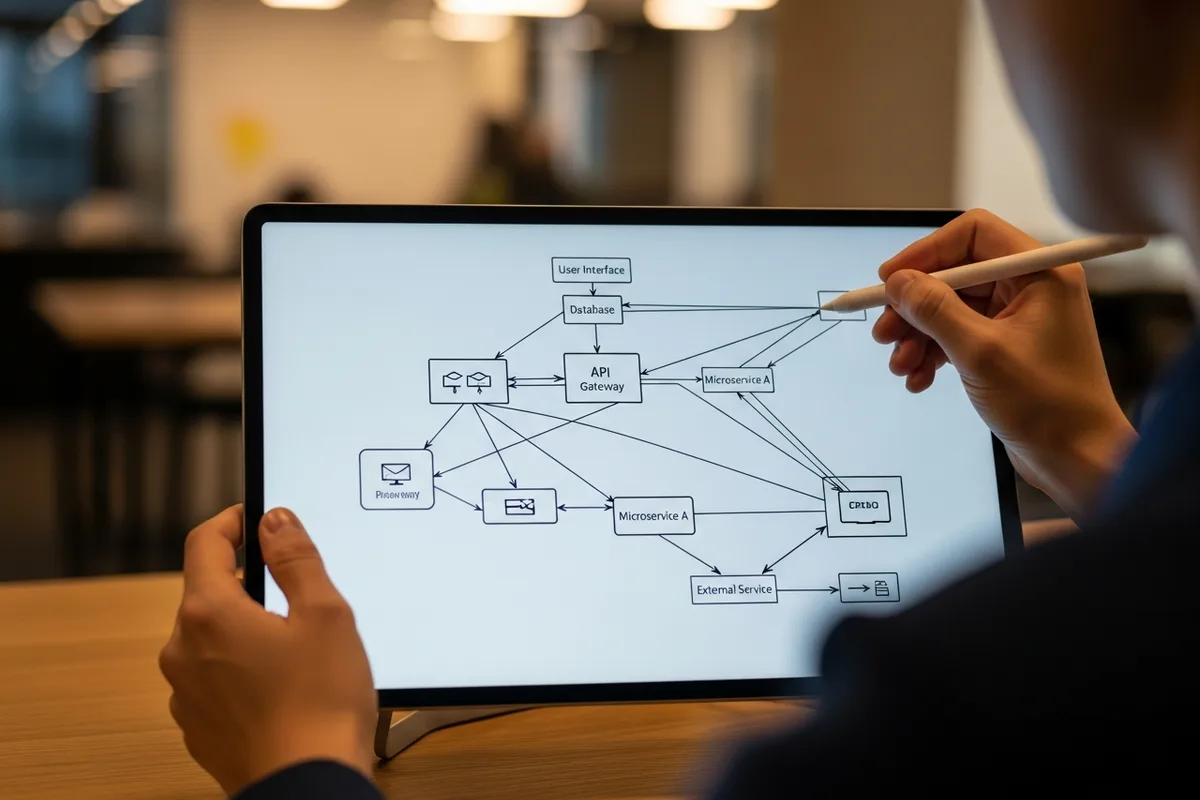

MCP is the plumbing that lets an AI assistant actually reach into your business data instead of guessing. I've built these connections into the free tools on this site, so I'm not describing a concept, I'm describing something already running in production.
Sound Familiar?
Signs your business needs api & mcp integrations now
Someone on your team manually exports data from one system and imports it into another on a regular basis.
Your CRM, analytics, and marketing platforms don't share data automatically, so no one has one accurate picture.
You've tried connecting an AI assistant to your business but it can only answer questions with generic, outdated information.
A previous integration was built once and nobody currently understands how it works or whether it's still running.
You want an AI tool to answer questions using your real numbers, not a screenshot someone pasted in a month ago.
You're evaluating AI tools for your team but none of them can actually see your business's own data.
If more than one of these hits home, the gap is already costing you leads. Get a free audit and we'll show you exactly where you stand.
The Payoff
What strong api & mcp integrations compounds into
Done right, api & mcp integrations is not a one-off fix. It becomes the foundation for stronger search performance, turning steady execution into rankings and revenue that keep climbing.
This chart illustrates how organic growth can compound over time. It does not represent a specific client account.
What Bad API & MCP Integrations Looks Like
Letting data live in five different tools with no connection between them, so someone manually re-enters the same information repeatedly.
Building a one-off, brittle integration that breaks the moment one system updates its API, with no one watching for the failure.
Connecting an AI chatbot to a generic knowledge base instead of your actual live business data, so it gives generic, unhelpful answers.
Ignoring authentication and data-access boundaries when connecting AI to internal systems, creating real security exposure.
Treating an integration as 'set and forget' with no monitoring, so a silent failure goes unnoticed for weeks.
Waiting for every tool in your stack to natively support MCP instead of building the connective layer now while it's still a real advantage.
How We Deliver
Systems and data audit
We map every system your business runs, your CRM, analytics, marketing tools, and internal databases, and identify where data currently moves manually. This produces a clear picture of which connections will save the most time and reduce the most error.
API integration build
We build reliable connections between your existing platforms using their APIs, so data that used to require manual export and import now flows automatically and stays in sync. Each integration is built to handle failures gracefully rather than fail silently.
MCP setup for AI-ready data access
We implement Model Context Protocol connections so AI assistants can securely query your real business data, your CRM records, your reporting, your inventory, instead of working from static exports. Access is scoped deliberately, so AI can see what it needs and nothing more.
Security and access boundaries
Every integration is built with explicit authentication and access scoping. We treat connecting AI to your business data as a security decision, not just a convenience feature, and we're deliberate about what each connection can and can't touch.
Monitoring and handoff
We set up monitoring so a broken connection gets caught immediately instead of failing silently for weeks. You get documentation of every integration and a clear point of contact if something needs adjusting down the line.

Concrete Deliverables
- A complete map of your current systems and where data moves manually between them
- Working API integrations that keep your key platforms in sync automatically
- An MCP setup that lets AI assistants securely query your real business data
- Explicit documentation of access boundaries and what each integration can and can't reach
- Monitoring so failed connections are caught immediately, not weeks later
- Full documentation and a clear point of contact for future changes
Tech & Tools
- Anthropic APIPower MCP-connected AI assistants that securely query your live business data.
- Model Context ProtocolProvide the standard, secure interface that lets AI tools access your systems.
 n8nOrchestrate multi-step integrations between platforms without vendor lock-in.
 ZapierConnect everyday business tools quickly for lightweight, no-maintenance automations.
 MakeBuild visual, multi-step integration workflows across complex tool stacks.
- PostgreSQLServe as a reliable, queryable data hub behind custom integrations.
- Google Sheets APIUse spreadsheets as a flexible, low-friction integration endpoint when appropriate.
API & MCP Integrations for Every Chicago Industry
Related Services
Custom Tools & App Development
Custom tools, dashboards, and web apps for Chicago businesses, built fast with AI-assisted development. See the free tools on this site as proof.
AI Adoption & Business Transformation
AI adoption consulting for Chicago businesses. We automate workflows, cut costs, and boost AI answer engine visibility. Free AI readiness audit.
Reporting & Automation
SEO reporting and automation for Chicago businesses. We build live dashboards, automated alerts, and zero-effort monthly reports. Free reporting audit.
Frequently Asked Questions
MCP, or Model Context Protocol, is a standard way for an AI assistant to securely look up and use your business's own information and tools, similar to how a universal adapter lets the same plug work in outlets around the world. Instead of building a custom, one-off connection every time you want an AI tool to see your data, MCP gives AI a shared, secure language for asking your systems a question and getting a real, current answer back. It's quickly becoming the default way AI tools connect to real business data.
If your team currently exports data from one system and manually imports it into another, or if an AI tool you've tried can only give generic answers because it can't see your actual numbers, that's exactly the gap these integrations close. Connecting your systems eliminates the manual re-entry and the errors that come with it, and setting up MCP means AI assistants can answer questions using your real, current business data instead of a stale screenshot or a guess.
It is, when it's built deliberately. We treat every AI-to-data connection as a security decision: we scope access explicitly so an AI assistant can see exactly what it needs and nothing more, use proper authentication, and document every boundary. The risk isn't connecting AI to your data, it's doing it carelessly. Done right, it's no different from any other access-controlled integration your business already relies on.
Yes. A significant part of this work is straightforward API integration between the tools you already use, your CRM, analytics platform, marketing tools, and internal databases, so data syncs automatically instead of through manual export and import. MCP is the newer layer specifically for connecting AI assistants to that same data securely. Most engagements involve some combination of both, depending on what your business actually needs.
We build integrations with monitoring in place specifically so a breaking change gets flagged immediately instead of failing silently for weeks, which is the most common way integrations quietly stop working. When a connected system changes its API, we're notified, diagnose the issue, and update the integration. This is part of why we recommend an ongoing support arrangement rather than a one-time build with no one watching it.
If you're manually moving data between two or more systems on any regular basis, the integration usually pays for itself quickly in hours saved. On the MCP side, being early matters: the businesses setting up AI-ready data access now will have a working, mature setup by the time it becomes standard practice, while everyone else is starting from zero. You don't need an enterprise-scale stack to benefit, you need at least one repetitive manual data-moving task, which most small businesses already have.
They compound each other. AI adoption identifies where automation and AI genuinely save time; custom tools and app development builds the actual software; API and MCP integrations make sure that software, and any AI layered on top of it, can see and use your real business data instead of static exports. Most engagements touch at least two of the three, because a workflow rarely improves by fixing only one layer of it.
The Cost of Waiting
MCP is becoming the default way AI reaches business data, and the early integrations are the ones that compound
Model Context Protocol is quickly becoming the standard method AI assistants use to connect to real business systems, in the same way HTTP became the default way browsers talk to the web. Businesses that build these connections now get AI tools that can actually see their real numbers, while everyone else keeps feeding AI stale screenshots and manual summaries. This isn't a distant, speculative shift, it's happening in the tools available today, and the businesses wiring their systems together now will have a working, mature setup by the time it's table stakes. Waiting doesn't avoid the work, it just means doing it later, under more pressure, after competitors already have it running.
Every manual export-and-import cycle costs real hours weekly and introduces errors that a live connection wouldn't.
AI tools without access to your real data give generic answers, so the productivity gain everyone else is capturing stays out of reach for you.
Building the integration layer later, after more of your stack has grown around manual workarounds, is harder and more expensive than building it now.
No obligation. We'll show you what the delay is costing and where to start.
The Shift to AI Answers
Google is answering searches before anyone clicks
AI Overviews, ChatGPT, and Gemini now settle more and more searches right on the results page. For Chicago businesses, that means the clicks (and the calls) that used to be yours are quietly going to whatever the AI decides to cite.
of the #1 result's clicks vanish when an AI Overview sits above it, leads that never reach your phone.
of informational and “how-to” searches already trigger an AI Overview, exactly where service businesses get found, and it's climbing.
Google searches still send a click to the open web. The rest end on the results page, and AI answers are accelerating it.
The businesses that adapt now will own the answer box.
We make sure AI Overviews, ChatGPT, and Gemini cite you, not the competitor down the street, so the next wave of searchers still ends up on your phone.
Need a API & MCP Integrations Expert?
We audit, build, and execute senior-level strategies for Chicago businesses.
Get Your Free Audit